
A SILENT REVOLUTION
How technology is shaping traditional business
10/24/20253 min read
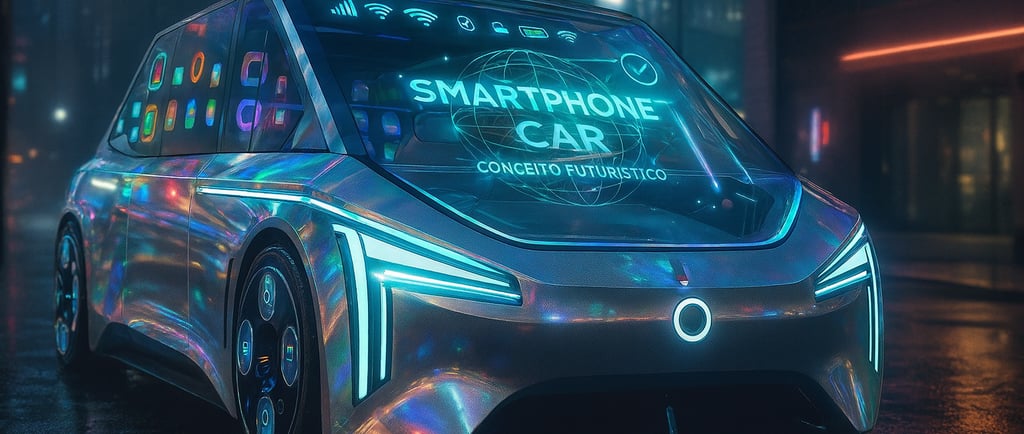
In 2020, the VW Group's global CEO declared that VW would no longer be an automobile manufacturer and would become a technology company, launching CARIAD, a software division that would bring together all the group's developers and work for all brands: VW, Porsche, Audi, Bentley, Lamborghini, Ducatti, Seat, and Skoda. This move, initiated with the support and participation of the omnipresent Elon Musk, promised to completely transform VW's business in the shortest possible time.
CARIAD's promise was simple: to unify all the group's various platforms, improving development speed, operating system robustness, and overall performance. This announcement came in the wake of the so-called Diesel Gate scandal, and VW had imported its CEO, a rare move, as the position is typically held by professionals with long careers within the group.
His vision was pragmatic and current: with so much and increasingly more technology embedded in vehicles, the essence of the business has changed, and anyone who wants to be competitive must recognize this. Tesla, a pioneer in the movement, operates like a smartphone factory, and this is the secret to the success of Chinese automakers like BYD and GWM. They understood that they need to master technology because it is the core of innovation and the basis of what we consider drivability today.
Until the 1960s, vehicle production was an activity that mixed production lines and craftsmanship. That's why vehicles of the time had bumpers with over 100 chrome parts and finishing details that are still rare today.
Since Toyota created Just In Time, vehicle production has evolved systematically and rapidly. From the production line, we evolved to cells, from cells to the introduction of robots, and from that point on, nothing has been the same. With electric vehicles, there is virtually no manufacturing in a modern factory because motors are no longer assembled manually. From body assembly to painting, everything is done by robots in factories that operate in the dark. To give you an idea, a vehicle leaves BYD's production line every 37 seconds. The area where some manual work still remains is the upholstery, including seats, but this is also being transformed.
When the Total Quality concept was implemented, it was already known that total quality cannot exist without flawed processes, but what was not anticipated at the time was that a car would become increasingly similar to a consumer electronics product. With a consumer electronics product, you don't care how it's produced, but how it performs. And today, especially in electric cars, performance is the operating system.
Offering a reliable, fast, and intuitive operating system has been a struggle for automakers since embedded technology arrived to stay. The more sensors and digital functions a vehicle has (from one-touch power windows to traction control), the more processing and ECUs (electronic processing units) are required. That's why a high-end vehicle has a wiring harness over 3 km long. With so many connections, the software needs to be able to change the onboard temperature while calculating the optimal use of stored battery energy and activating the ABS. All these functions are competing for electronic decisions. Problems with software glitches, as well as processing errors (Mercedes recently had an emergency device that could lead to accidents) have become common and, in many cases, dangerous. Volvo has just unified its platform and is suffering from system errors, from customers trapped inside vehicles to minor accidents. The same is happening with Tesla vehicles, the brand that introduced the latest revolution in production.
But, returning to the beginning of our story, to the former SEO's statement, we see that he understood the game. He realized that an automaker today is not even a shadow of what Ford created and is increasingly similar to Apple or Samsung. Mastering production at all stages, including the perfect integration of hardware and software, is essential.
But this change isn't just in the automotive sector. Keller Williams, the world's largest real estate brokerage, realized years ago that it was a technology company. And it restructured itself accordingly. Meta, Uber, and Airbnb are technology companies, not just Google, Apple, and Samsung. Understanding this creates a single, cohesive approach that eliminates waste, errors, and quality issues.
That's what VW's CEO saw, but only he. The creation of CARIAD was supposed to unify the platforms and platform development, but that was exactly the opposite. Each company in the group provided its top engineers and budget on one condition: that they prioritize the needs of the original brand. In other words, while Porsche fought for one evolution, Audi for another, VW for another, and so on. So, Instead of a single operating system, they moved in three different directions: existing platform 1.0, improved platform 1.5, and evolved platform 2.0. They couldn't have understood the need worse.
The consequences of this? Only time will tell. But many experts say that few brands will remain in the market, especially given the 129 Chinese brands (which won't all survive either). Chrysler, Dodge, Maseratti, Alfa Romeo, Jaguar, Rivian, Lancia, and Nissan are among the most threatened brands. The Stelantis group itself is under threat.
What I'm certain of? That anyone who doesn't master technology from end to end is done for. Regardless of the segment.